![[logo]](https://internationalministries.org/wp-content/themes/blankslate/images/im-logo.png)
 Training and Capacity Building
Over the past several months, we have found ourselves returning again and again to the story of Nehemiah.
Like many, it is common to think of Nehemiah as a story about rebuilding a wall. But as we have spent more time discussing it, in reality the wall is only a part of the story, and we have found more and more pieces of our own ministry reflected in the story.
Most of us remember Nehemiah as the man who rebuilt Jerusalem’s walls. Yet what captured our attention was not the construction project itself. It was the way Nehemiah approached the work.
Before he ever touched a stone, Nehemiah spent months praying, grieving, and discerning. What captured our attention is everything that happened before a stone was relayed.
When Nehemiah first heard about the condition of Jerusalem, he did not immediately launch into action.
He grieved.
He prayed.
He fasted.
He waited.
For months!
When the opportunity finally came, prompted by the king, Nehemiah had the attention of the king and the request of the king to know what he needed. Nehemiah could have asked for anything, he could have told the king the whole long sad story and made a wish list. But Nehemiah did not demand everything the king could provide. He asked only for what was needed: permission to go and the authority to travel safely. The king could have taken over the project, supplied endless resources, or imposed his own solution. Instead, he provided what was necessary and allowed the people of Jerusalem to do the work themselves.
Those details stuck with us.
Too often, whether in missions, ministry, or everyday life, it can be tempting to step in with our own plans, resources, and solutions. And why not? We have and we can. Yet Nehemiah reminds us that supporting and serving are not the same as taking ownership.
Even after arriving in Jerusalem, he did not announce a grand plan or begin organizing workers. Instead, he spent time observing. He listened. He assessed the situation. He sought to understand what was happening before deciding what should happen next.
As the rebuilding began, the people repaired the sections of wall closest to their own homes. They worked by their own skill with resources mostly from their own area where they lived, where they would benefit, and where they would remain long after Nehemiah was gone.
Neighbors encouraged one another.
Families shared responsibility.
Some built while others stood watch.
The work belonged to the community.
Nehemiah’s leadership was essential, but the wall was never his project. His pre-work of discernment and waiting took months—the rebuilding of the wall only took days!
As we reflected on this, we realized how much it resonates with the way God has shaped our ministry on the island.
Many people understandably think of missions in terms of visible projects, programs, events, or measurable outcomes. Certainly, there is a place for those things. Yet much of our daily ministry looks less like building walls and more like Nehemiah’s season of prayerful observation before the work began.
Many of the opportunities we are involved with today, even seven years after first entering the field, are still in early stages. Some leaders are exploring vocational opportunities that could provide both employment and character formation. Others are discerning how land, facilities, or ministry spaces might best serve their communities. Still others are rebuilding, dreaming, planning, and praying about what comes next.
In nearly every situation, our role looks less like directing and more like accompanying.
We ask questions.
We listen.
We encourage.
We connect people and ideas.
We help think through sustainability and long-term impact.
Rarely, we help obtain resources or raise awareness.
Most often, we simply walk alongside people as they seek God’s direction. Much of our time is spent listening.
Listening to pastors as they wrestle with challenges facing their congregations.
Listening to community leaders as they discern what their neighborhoods need most.
Listening to young people who are searching for opportunities, purpose, and direction.
Listening to ministry partners who are seeking ways to serve their communities faithfully and sustainably.
At times, this can feel slow. In cultures that often value immediate action and visible results, slowing down can even feel uncomfortable. Yet Nehemiah reminds us that discernment is not a delay to ministry—it is often an essential part of ministry itself.
None of these efforts are fully formed. Many remain in the stages of conversation, planning, prayer, and discernment. Yet that, too, is important work.
One lesson Nehemiah continues to teach us is that faithful ministry is not always about being the person with the vision, or even the answers. Most often, it is about helping others discover and pursue the vision God has already given them. Like Nehemiah, we have become increasingly convinced that lasting transformation and the ministries that endure are often those that emerge from local leaders who understand their communities, carry the vision themselves, and are empowered by the Holy Spirit to lead.
We often find ourselves serving as encouragers, connectors, listeners, and fellow discerners.
We ask questions.
We offer perspective.
We pray.
We walk alongside people as they seek God’s direction for their communities.
Nehemiah did not rebuild Jerusalem’s walls by himself. The work was accomplished by people who lived there, loved their city, and shared responsibility for its future. The people had the ability and resources within their reach all along. His part was helping to unite, encourage, and organize others for the work before them.
That image continues to challenge and encourage us.
It also raises questions for all of us, whether we serve in the Dominican Republic, Haiti, or in our own neighborhoods.
How often do we pause long enough to listen before acting?
How might God be inviting us to spend more time discerning and less time rushing toward solutions?
Who are the people around us whose gifts and vision simply need encouragement and support?
Where might God already be at work, inviting us to join rather than lead?
What if discernment is not a delay to ministry but an essential part of it?
What if leadership is less about being in front and more about helping others recognize the gifts and calling God has already placed within them?
What if our role is not to build every wall ourselves, but to encourage those who are already standing beside it?
These are questions we continue to wrestle with ourselves.
Thank you for walking alongside us as we seek to do the same for others.
As always, we are grateful for your prayers, encouragement, and partnership. Your support allows us to remain present in these relationships and conversations, trusting that God is often doing important work long before it becomes visible.
To You, Abundant Love, Grace, Peace, and Blessings,
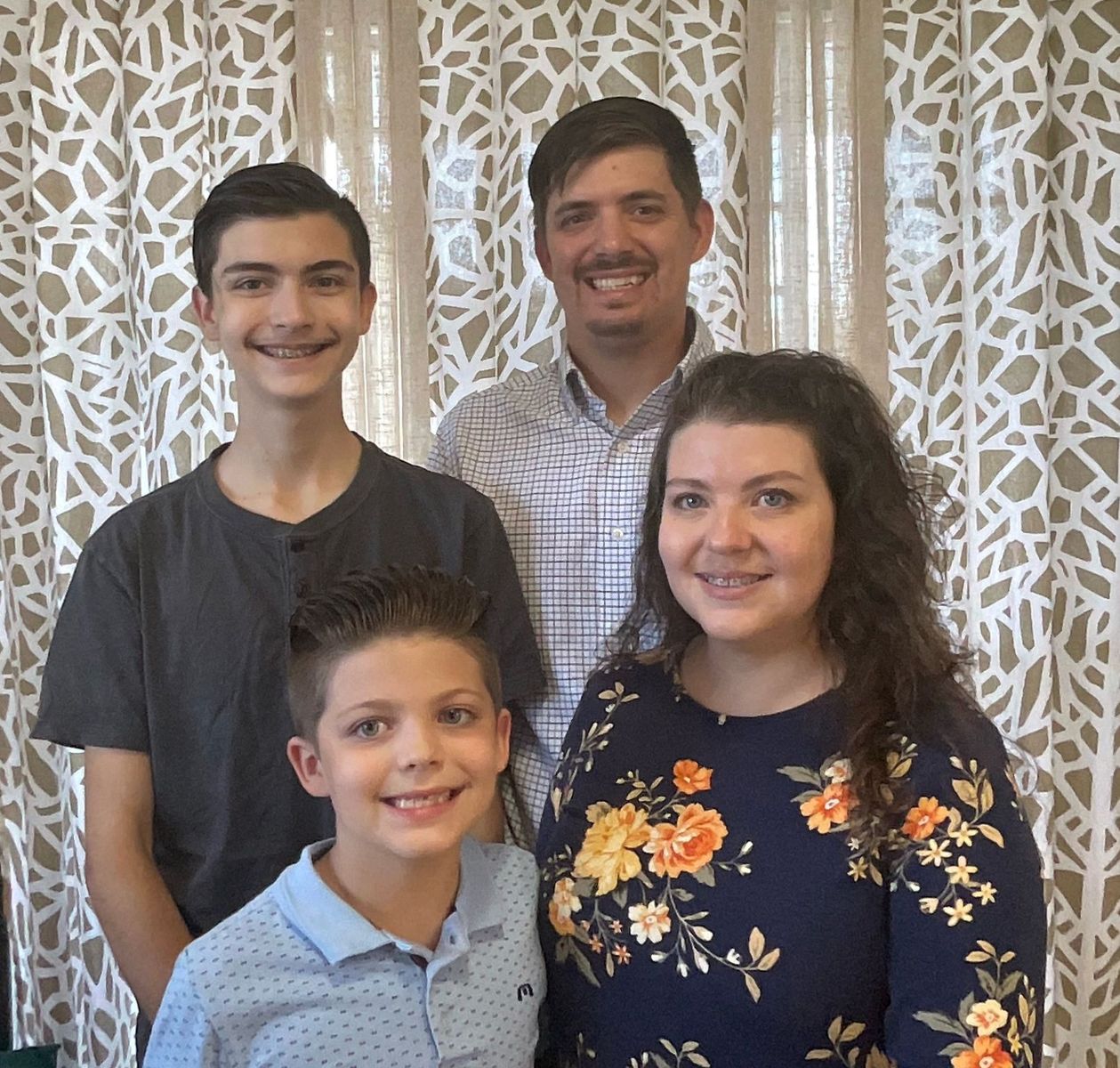
Brian & Lynette Smith
Global Servants, Hispaniola

We are Praying for…
· Wisdom and discernment as local leaders explore new opportunities.
· Patience to move at God’s pace and leading rather than our own.
· Healthy relationships marked by trust and mutual encouragement.
· Perseverance and hope for ministry partners serving in difficult circumstances.
· Prudence as we balance ministry, family, and personal spiritual growth.
· Sensitivity to where God is already at work around us.
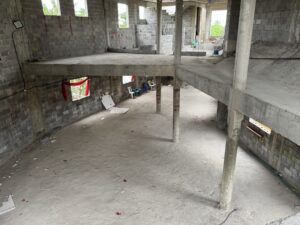
Project in BienvenidoPray for and consider contributing to the rebuilding efforts of the church in Bienvenido as local believers work to restore a gathering place for worship and community ministry.
Visit the Project: Rebuilding Hope Iglesia Bienvenido

![[pie chart]](https://internationalministries.org/wp-content/themes/blankslate/getPieChart2.php?p=0.6)
![[world map]](https://internationalministries.org/wp-content/themes/blankslate/images/IM_map_global.png)