![[logo]](https://internationalministries.org/wp-content/themes/blankslate/images/im-logo.png)


 Tending the Tenders
I sit down to edit this update that I started last week and find myself at a loss for words. I struggle to express what feels raw and right to say. My stomach knots, my throat closes, my chest constricts and feels tight. I cringe whenever I read or hear comments in the news about my home country bringing other countries to their breaking point, using violence and force to make sovereign nations capitualate to our wishes and serve our interests as if God ordained it. War, America first mentality, and Christian nationalism are not Christian nor in anyway compatible with my understanding of faith and following Jesus. It hits home, it hurts and breaks my heart when I hear, “Cuba is in it’s last moments of life and gonna fall pretty soon. They want to make a deal so badly, you have no idea. Maybe a ‘friendly takeover’ is coming, not now but soon.” “Iran is going down and Cuba is next.” Soundbites, stereotypes, and political narratives tend to shape the way some might see the situation in Cuba. I, on the other hand, have seen and experienced a very different reality. Maybe telling some of my stories of the humans in Cuba will help tend to what’s tender right now. Maybe writing my way through wordlessness can help me to find the words. Maybe coming back to my senses: what I see, hear, smell, taste, and touch might help. I trust that attending to these tender places: what and where it hurts, and what and where there is hope, will help.
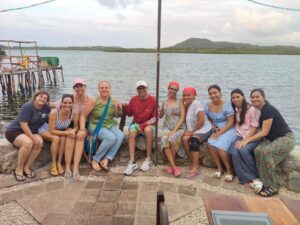
It was my ninth visit to Cuba since 2016. I breathed a sigh of relief when I saw my friend Ernesto’s giant smile as I walked through the exit door of the Holguín airport. Even though, as had become my routine, I was sent to secondary luggage inspection and one of the last to leave the airport, I was thrilled to be with my dear friends again. Planning for this visit, we were concerned that all flights to Cuba might be cancelled and that most inter-region transportation in the country would be suspended, thus cancelling our leadership retreat with our Expressive Arts in Transition educators. On top of dealing with major health challenges due to a recent chikungunya viral epidemic, the ripple effects from economic sanctions and US intervention in Venezuela, with its subsequent control of oil distribution in the region, are causing a great amount of suffering for the ordinary folk who call this place home. The airport cannot refuel planes, and it is very difficult to obtain gas for cars and buses. The transportation and tourism industries have collapsed across the island. People are either stuck in their homes or have to walk many kilometers to hospitals, work, or stores. The schools and universities have had to suspend in-person classes and are moving back online for now. These are tender and uncertain times.
 I surveyed the group to see if our gathering would be more of a burden than a blessing for them at this time. They assured me that they were all willing and wanting to be together for our anticipated three days. Many mentioned how important our gatherings were to them in feeling the “apapacho,” which means soul embrace, of their fellow facilitators in tough times. Thankfully, I was able to fly in because the short-distance flights from Miami were still operating. I was able to get online bus tickets for our leaders who would need to travel. Karelia and Idaliana traveled for four and twelve hours to attend, arriving tired yet grateful for this opportunity to gather. Marybexy arrived early and greeted me with a huge hug, then excused herself to finish an important work email before we started, so she would be fully present during the retreat. She was leading the psychology department’s efforts to creatively support university students’ transition back to online learning after on-campus classes were cancelled. She mentioned that navigating similar challenges during the Covid-19 crisis had prepared them well for this new, yet in some ways similar, situation. Each one is putting into practice the tools they have learned from the salutogenesis (health and resource-oriented) model we are exploring through Expressive Arts in Transition groups.
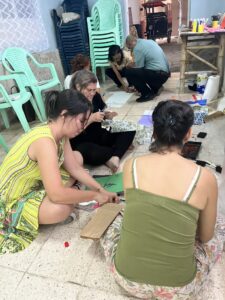
We spent the first two days finding, cultivating, and creating health and beauty through group art, visioning, and nurturing the ecosyste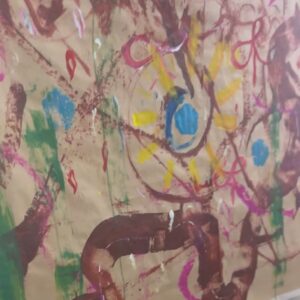 ms of the Expressive Arts in Transition program in Cuba. Our ecosystems include the educator group, the program’s certified graduates, and the upcoming cohorts in Holguin and Havana. Our purpose was to explore together what our personal and collective ecosystems of care consisted of and what we will need to thrive and grow. We set the group container by standing together in a circle, each taking turns speaking our names into the room and hearing the group welcome us. Seeing and being seen by each other, hearing and being heard by each other, and honoring ourselves and each other’s presence cultivated a sense of identity and belonging. We also tended to our physical needs by eating, moving, and playing together. For some, it was rest and renewal, for others, it was discharge of pent-up emotions or stress. We were careful to listen to what each body needed at the time, offering choice with a challenge to explore the edges of their comfort towards growth with grounded breathing, stretching, and movement exercises. We then tended to the group’s physical, emotional, relational, and spiritual needs for connection through a community art exploration of mark-making and non-verbal communication, creating 3-D ecosystem installations, role-playing aesthetic responses in supervision, and spending a day away together at the beach.
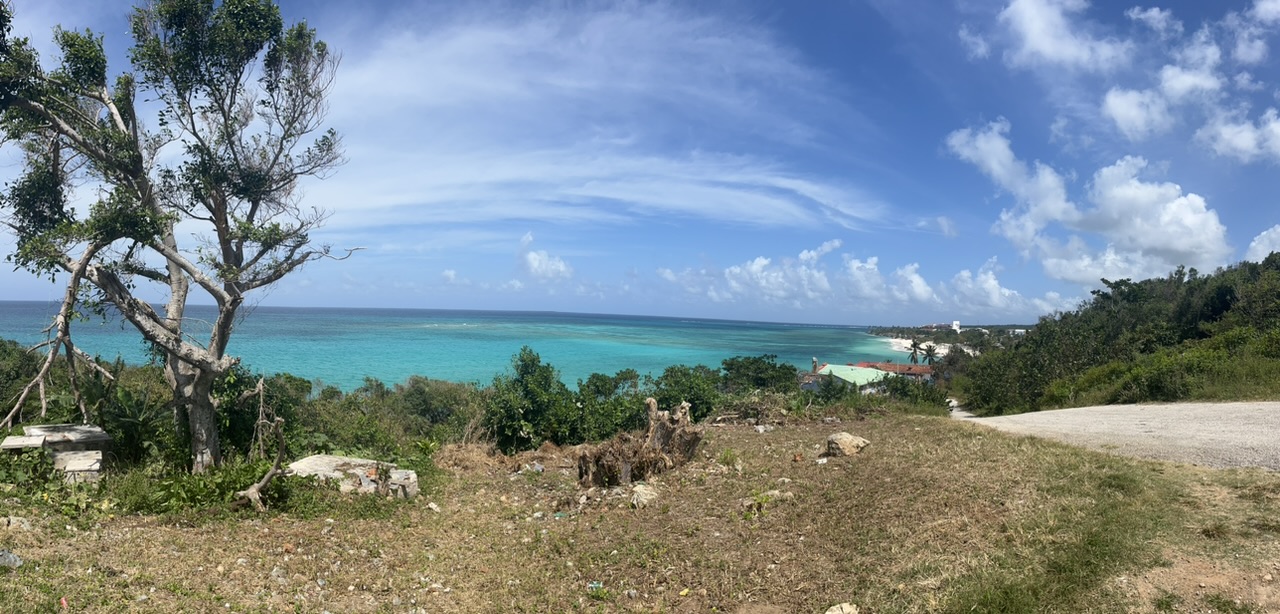
Looking at the beautiful beach images from our final day, someone teasingly asked me if I “worked” while on these trips. The group, enjoying the stunning beauty of their white-sand beach, pristine aquamarine ocean water, palm trees swaying in the breeze, and wispy clouds dancing across the sky, seemed more like a day in paradise on vacation than a working retreat. Because there are no tourists visiting these days, we were able to find someone desperate for work to transport us to the beach,
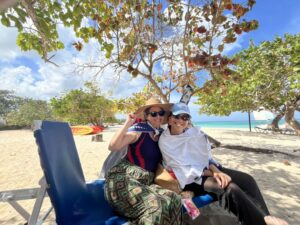 stay with us all day, take us out to eat, and then bring us home that evening for a very reduced rate. The beach was nearly empty since very few in the country have the means to get there. The weather gifted us with sunshine, warm water, and a gentle breeze. We experienced God’s apapacho. Everything we explored about ecosystems of care and aesthetic response during the first two days seemed to come together as we lived the experience together in the beach’s ecosystem. Immersed in waves and wind, sinking into sand and shade, seeing wide-open skies, smelling blooming flowers on trees, hearing the sounds of silence, salsa, and sillyness, and tasting fresh seafood brought us back to our senses. Being away from the everyday burdens they carry, navigating electricity outages, transportation challenges, and constant care of others allowed these souls to notice, savor and share “the mercies of the road” as Jan Richardson wrote in her poem, For Those Who Have Far to Travel.
Each time I visit, I am moved by the resilience of my Cuban brothers and sisters. In light of the multiple and complex challenges they face and have endured over decades, I often ask myself, “How do they keep moving forward when the suffering feels endless, and exhaustion seems constant?” I hear story after story of struggle, broken systems, scarcity, and personal sacrifice. Yet, I also hear stories of God’s goodness, grace, and miraculous provision, about communities caring for their neighbors, tending the sick and frail, sharing food and natural medicines, and figuring out how to switch to solar energy sources instead of depending on fossil fuels; all creative solutions to seemingly impossible situations. 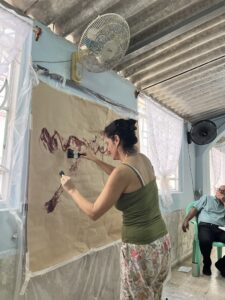
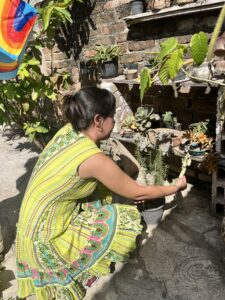
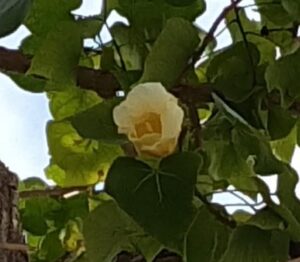
These dear humans I am privileged to train in our Expressive Arts cohorts are tenders. They tend to the needs of their communities. They tend to the tender places where it hurts. They are moved by compassion to engage with those who have been hurt and wounded. Their open hearts carry the stories of others as well as their own. They tell me, “Yes, it is hard. Yes, it gets discouraging. Yes, there are multiple crises happening at the same time. AND our lives are being transformed. We know in our bones that being together helps. And helping each other helps. And being heard and seen in the struggle helps. And art and breath and rest and play all help.” The evidence shows up in these bodies, with nimble nervous systems learning to return to calm and connection through breath and movement, able to regroup and repair. We see signs of life and health in the emotional, spiritual, and relational growth happening in churches, classrooms, and community centers, where our leaders are exploring arts-based healing practices in small groups. I see vitality in their faces, hear hope in their voices, and feel the apapacho in their touch as they greet me and each other with affection. Noticing beauty is becoming habitual, blossoming through cracks in the concrete and cradled in fractals, flowers, and familiar objects found fascinating again.
When I started this note, I had no words. Now, I’ve filled almost three pages. If you made it to the end of this, thank you. Thank you for holding my heart and hearing my stories. Thank you for seeing beyond the headlines to the people whose lives are impacted and touched by the complicated situations we are ALL connected to. Thank you for your gifts of solidarity and presence in the struggle. Thank you for being curious enough to care.
![[pie chart]](https://internationalministries.org/wp-content/themes/blankslate/getPieChart2.php?p=0.75)